
· by Michael Blair, Nashville's Garage Door
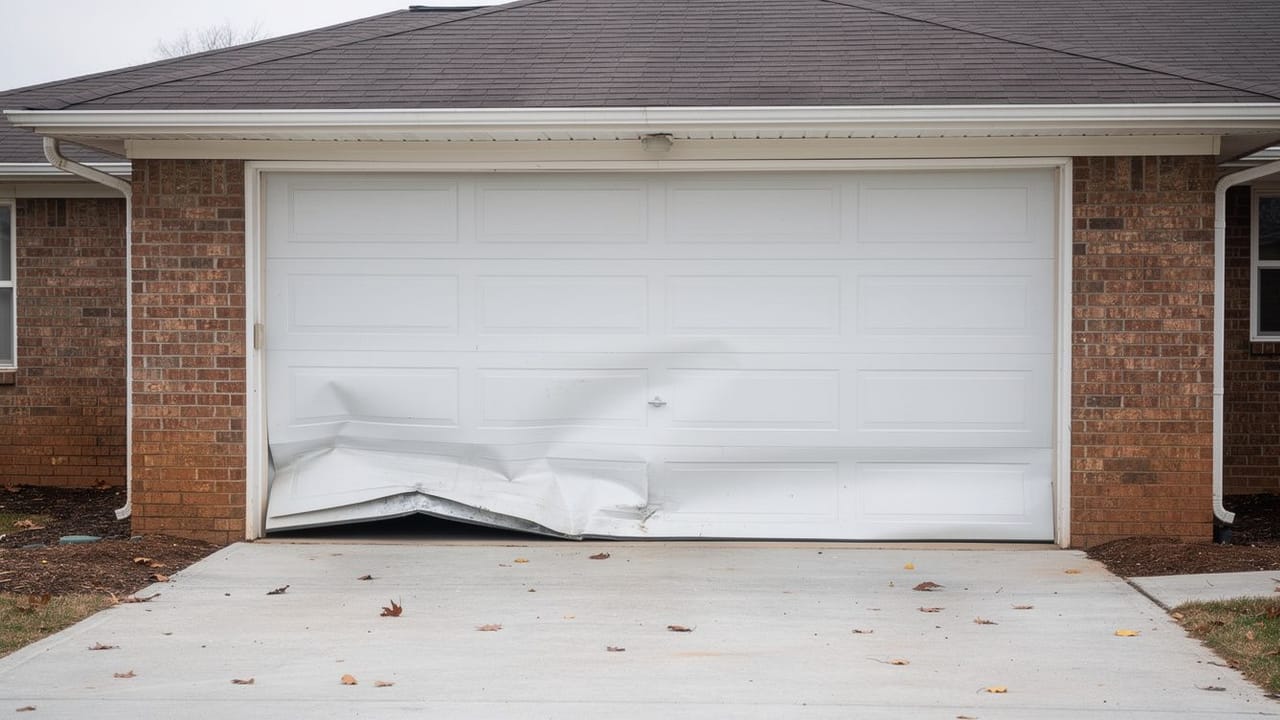
Most damage to a garage door lands on one section: a car backed in too soon, a ball, a mower that rolled. The rest of the door still works and still looks fine, so replacing everything seems like a lot. A sectional door is built in horizontal sections hinged together, and a single section can often be replaced on its own. Whether yours can depends on three things: whether the maker still makes the part, whether the damage stopped at that one section, and whether the door has to come apart under spring tension to do it.
Can you replace just one panel on a garage door?
You can often replace just one panel on a garage door, provided the maker still produces that section for your model. Clopay, one of the large door makers, says in its own article on whether garage door panels can be replaced that single panels can be swapped to restore how a door looks and works, and that a dealer will need the model, the section size, the color and the position of the damaged section, top, bottom or intermediate.
Finding those details starts with the door itself. For doors Clopay built within roughly the last ten years, it says the serial number of 15 or 16 digits is on the inside of the bottom section. Other makers label their doors in their own ways, and that is one maker’s guidance for its own doors. When we look at a damaged door for panel and damage repair, identifying the maker and model comes before any talk of a fix, because everything else depends on whether the exact section can still be ordered.
Why does a replacement garage door section have to match exactly?
A replacement section has to match exactly because two parts that look alike can differ in strength. The Door & Access Systems Manufacturers Association makes this point in its technical data sheet on component substitution. A part that resembles the original may be made from thinner metal or a weaker material by margins too small to see, and a door can depend on details such as extra fasteners in particular spots, longer rollers, stronger roller bearings or heavier track.
DASMA says swapping in parts that are not identical can weaken a door tested or certified to a standard, leave whoever made the swap liable, and give the certifying agency grounds to void the door’s certification. Its advice is to contact the original door manufacturer with any question about substituting a component. In practice, a generic section that happens to have the same raised-panel pattern is not a match. We cover the same rule as it applies to tracks and brackets in what else changes when a whole door is replaced.
When is a new door the better answer than one new panel?
A new door is usually the better answer when the matching section is no longer made, or when the damage reaches beyond one section. Clopay’s article points to a door older than about 15 years whose panels are discontinued, panels that sag or bend, damage spread over several sections, and a damaged frame as reasons a whole door may cost less in the end. With one or two damaged panels, it calls replacement a likely option.
DASMA’s technician’s sheet on checking a sectional door for damage frames the same decision from the installer’s side. Once a problem turns up, the technician judges whether to repair or replace, paying close attention to the sections, stiles, struts, hinges, rollers and fasteners, and then lays out every workable option for the owner. A dent in the face of one section is a different job from a bent strut or torn hinge points, which is why we look at the back of the door as closely as the front before quoting either.
Is it safe to replace a garage door section yourself?
Replacing a garage door section yourself is not safe, because the door has to come apart while its springs are carrying its weight. DASMA’s homeowner’s sheet on checking a door for damage says building occupants should not remove, adjust or repair doors, springs or other door parts, and that only trained door technicians should. Clopay’s article gives the same warning about the weight of the panels and the tension in the spring, and tells owners never to loosen or remove a spring themselves. Our spring repair page covers the springs themselves.
What an owner can safely do is look. The same DASMA sheet suggests checking the sections from inside and outside for cracks, dents or buckling, and on a wood door for splitting or bowing, particularly around the fasteners of the end hardware, which can point to structural damage. It adds that any bent panel, track or hardware makes the door’s operation questionable and calls for a professional. We replace sections across Nashville and Davidson County and the surrounding towns. If a section on your door is dented or cracked, ask us for a free estimate and we will find out whether the matching part can still be had.
Sources
- DASMA Technical Data Sheet #183, Garage Door Component Substitution — Parts that look similar may differ in material thickness or strength; subtle features such as extra fasteners, longer rollers, stronger bearings and heavier track; non-identical substitutions may weaken a tested or certified door, create liability and void certification; contact the original manufacturer.
- DASMA Technical Data Sheet #174, Building Occupant: Checking a Residential Sectional Garage Door for Damage — Occupants should not remove, adjust or repair doors, springs or other components; look for cracks, dents or buckling in sections and splitting or bowing around end hardware on wood doors; deformed panels, tracks or hardware call for a professional.
- DASMA Technical Data Sheet #175, technician’s damage check for sectional doors — After a problem is found, judge repair or replacement with attention to sections, stiles, struts, hinges, rollers and fasteners, and present the owner with every viable option.
- Clopay, Can I Replace My Garage Door Panels? — One manufacturer’s guidance for its doors: individual panels can be replaced; the dealer needs model, section size, color and position; serial number on the inside bottom section of doors from the last ten years; full replacement may be better for doors over 15 years old with discontinued panels or damage across sections or the frame; never loosen springs yourself.
FAQ
Can You Replace Just One Garage Door Panel? — questions
Can garage door panels be replaced individually?
On many sectional doors, yes. Clopay says its dealers can replace individual panels when they know the model, section size, color and position of the damaged section. The replacement should come from the door’s original maker, since DASMA warns that look-alike parts can differ in strength in ways you cannot see.
Can you replace a dented garage door panel?
Usually, if the dent is confined to one or two sections and the maker still makes that section. A door with dents across several sections, bent struts or a damaged frame is a different case, and Clopay lists those among the reasons replacing the whole door may cost less.
Will a new panel match an old garage door?
Only if it comes from the door’s own maker for the same model, size and color, the details Clopay says its dealers need. Clopay names doors older than about 15 years whose panels are discontinued as a case where a whole new door makes more sense than hunting for a match.
Can you replace the bottom garage door panel?
Yes, the bottom section is one of the positions Clopay lists for single-panel replacement, along with top and intermediate sections. On Clopay doors from about the last ten years the serial number is on the inside of that bottom section, so note it before anything is removed.